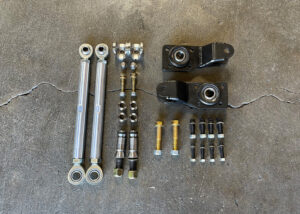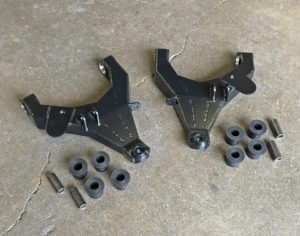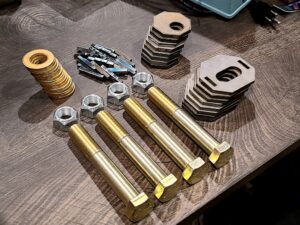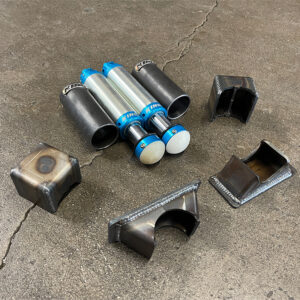

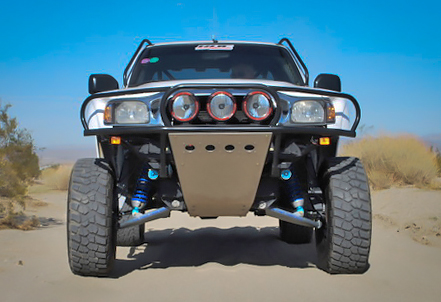


Description
Toyota 4WD Fabricated Spindles with Dana 44 Hubs
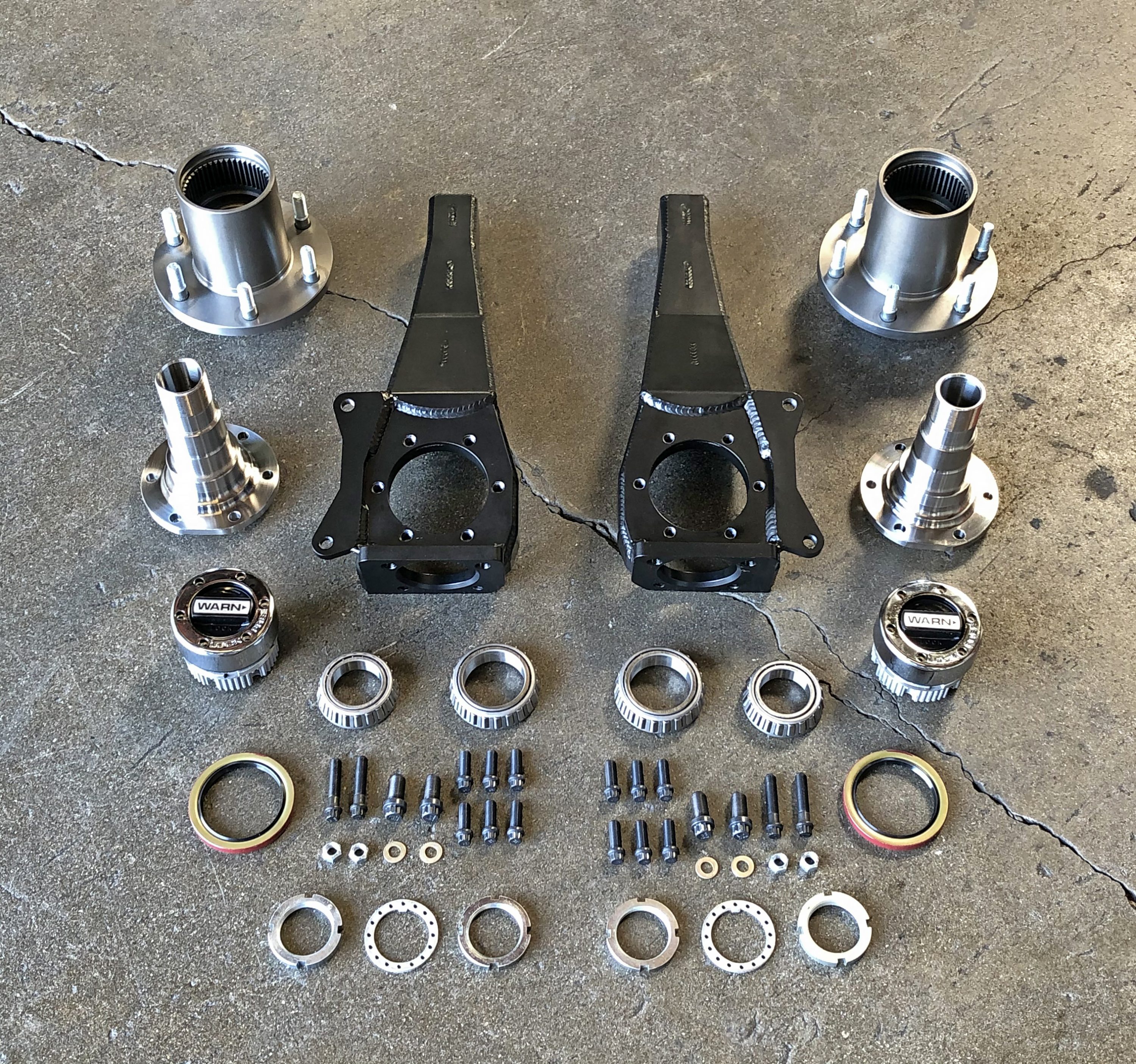
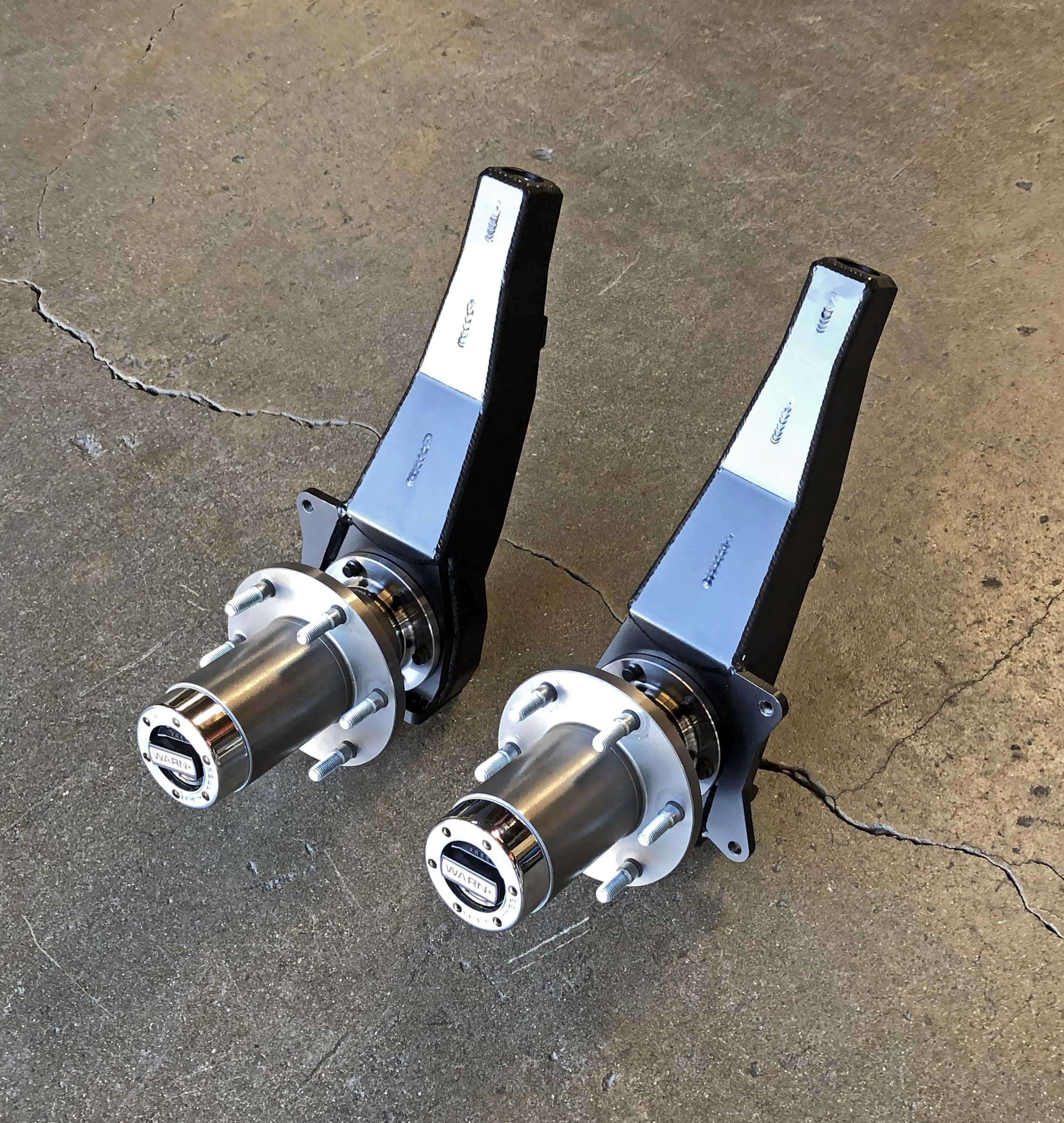
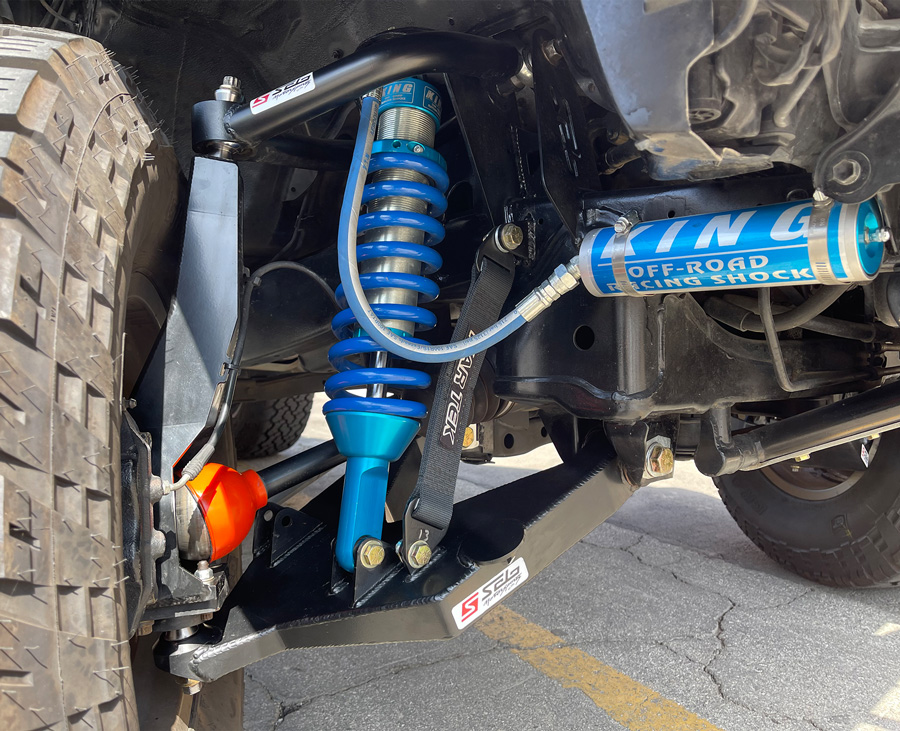
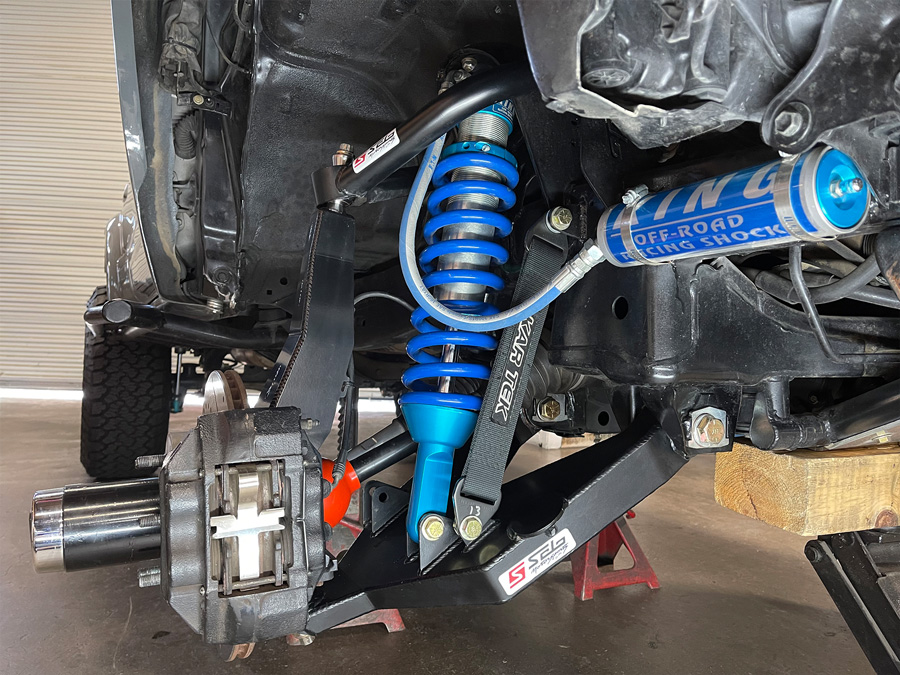
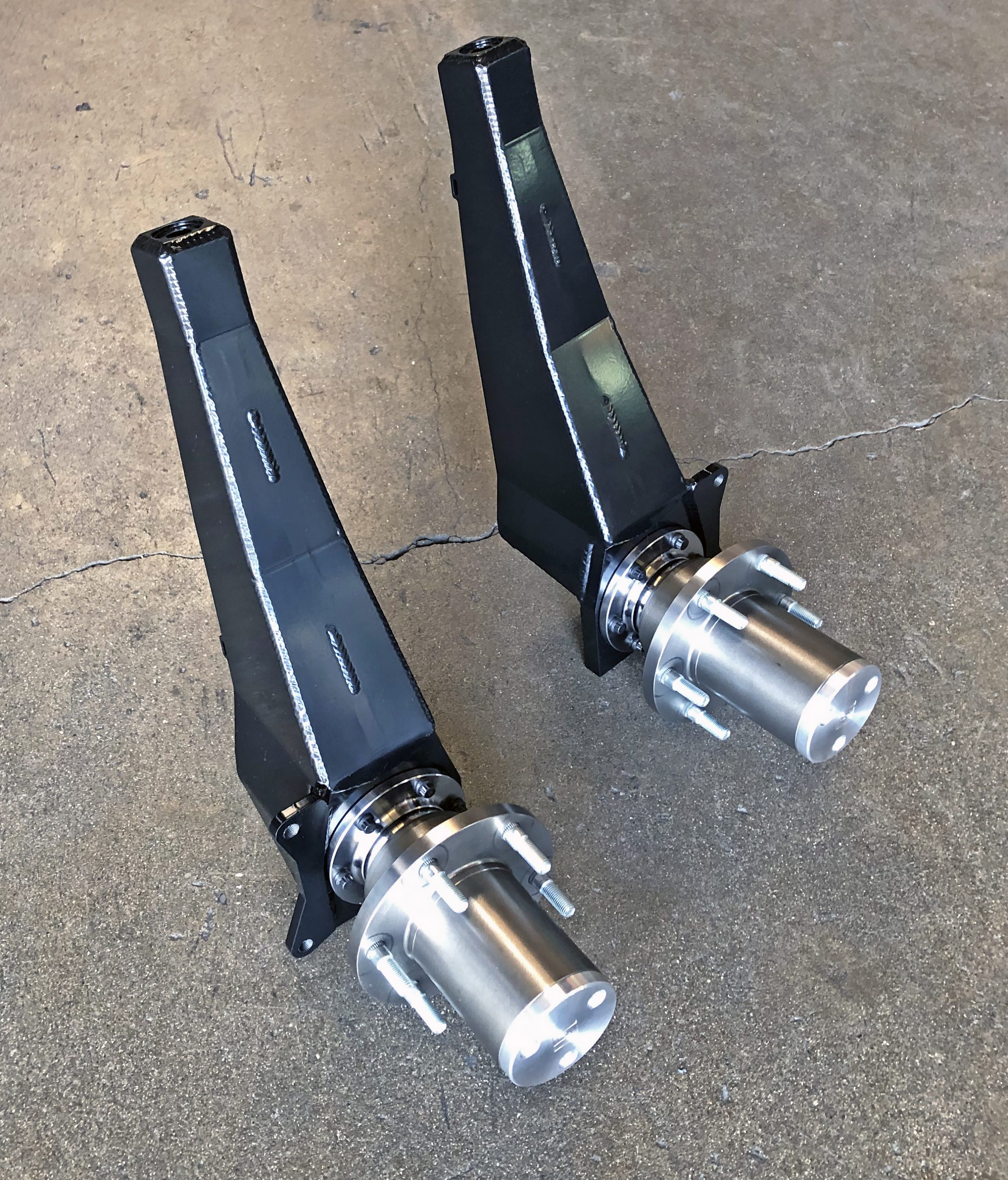
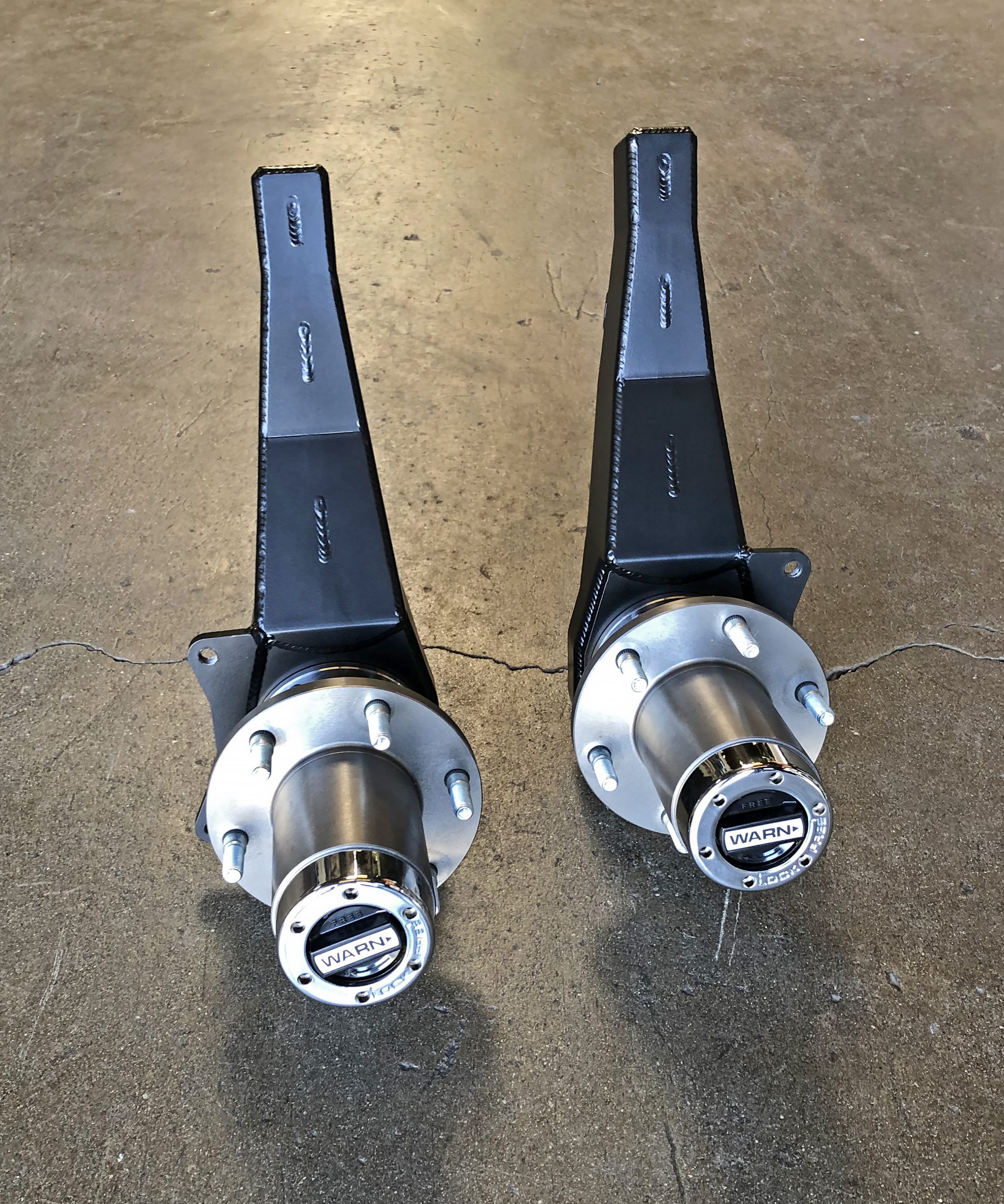
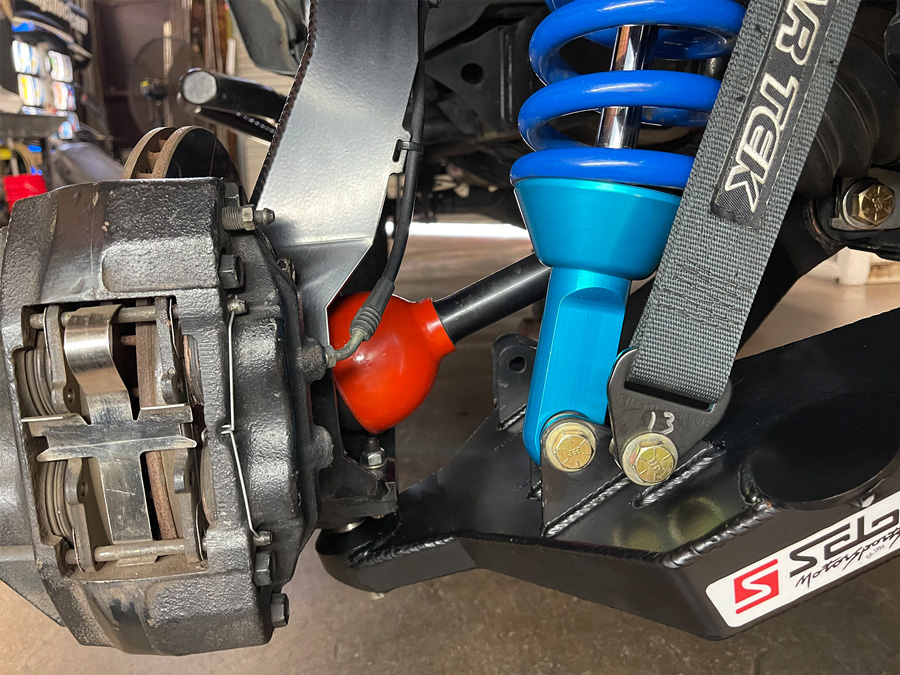
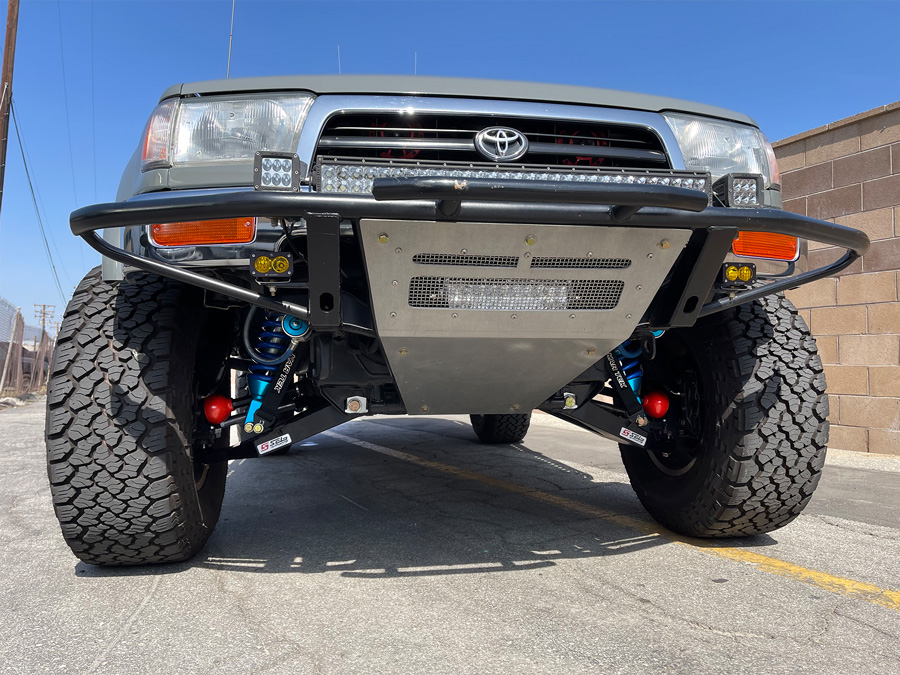
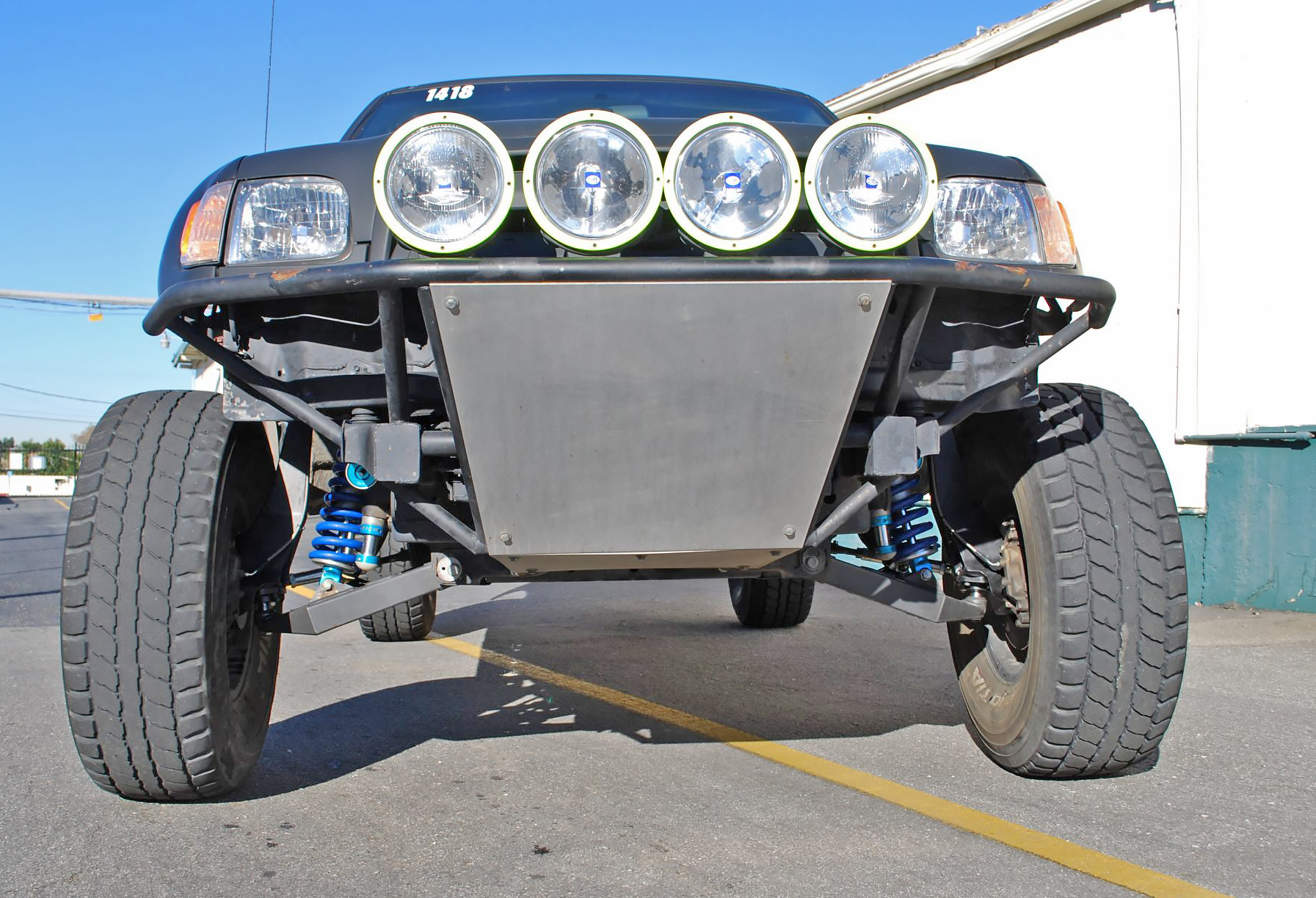
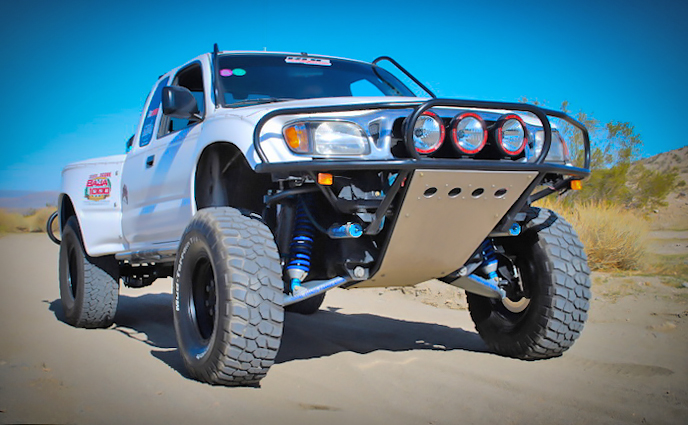
The Solo Motorsports Toyota 4WD Fully Fabricated Spindles are designed for off-road Toyota trucks running larger tires and upgraded suspension. Instead of reproducing the factory Toyota spindle and wheel bearing design, we built our spindle around a heavy-duty, fully serviceable Dana 44 hub and wheel bearing system.
We chose the Dana 44 hub because factory Toyota wheel bearings can become a weak point when running 35″ or larger tires. Larger tires create additional leverage and load on the wheel bearing. Once a factory bearing develops play, there is no adjustment to tighten it back up. Replacing the bearing can also require large shop equipment.
Our Dana 44 hub setup takes a different approach.
Why We Use Dana 44 Hubs
The Dana 44 hub uses separate inner and outer wheel bearings that ride on a spindle snout. As the bearings wear and begin to develop play, they can be inspected, serviced, and adjusted instead of immediately replacing the entire bearing assembly.
More importantly, the hub can be serviced with common hand tools. If bearing play develops during an off-road trip, you can service and adjust the bearings on the trail to help get the truck home or to a parts store.
When the bearings eventually need replacement, the inner and outer bearings can also be changed without the large shop machines needed to service the factory Toyota wheel bearing.
For trucks running large tires far from pavement, we believe serviceability is just as important as strength.
Built for Up to 37″ Tires
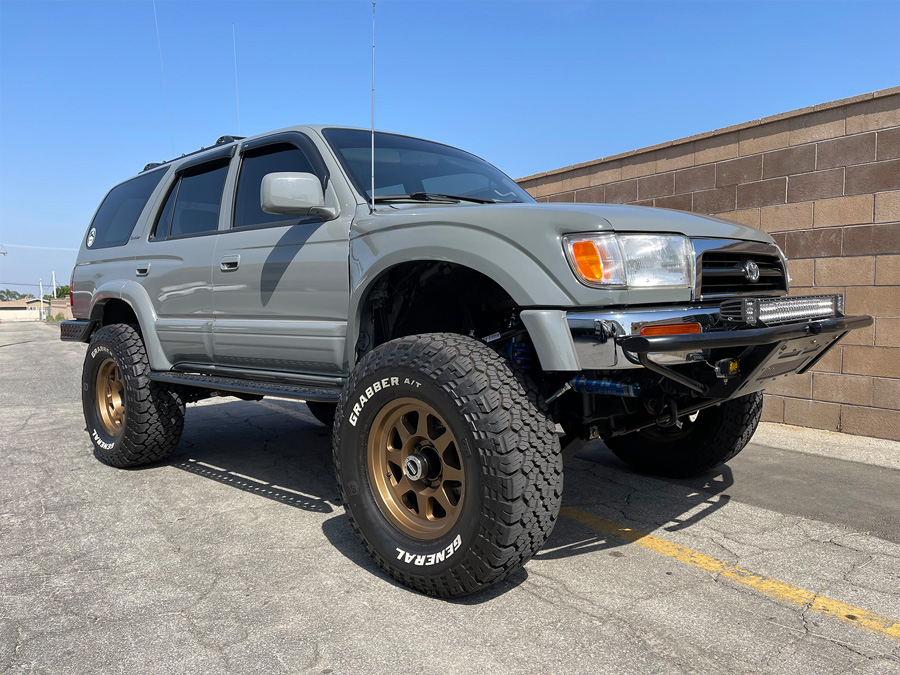
The standard Dana 44 hub system is designed for tires up to 37″, making it an excellent upgrade for Toyota trucks running larger off-road tires.
Unlike our 2WD fabricated spindle, the 4WD spindle maintains stock-height spindle geometry. This is intentional and necessary to retain the 4WD axle configuration.
Why Isn’t the 4WD Spindle a Lift Spindle?
On a 4WD Toyota, the front axle must pass through the spindle and connect to the hub. Because the axle establishes the relationship between the differential, spindle, and wheel hub, we cannot simply move the hub downward 3″ like we can with our 2WD lift spindle.
For this reason, the Solo Motorsports 4WD spindle maintains stock-height geometry. The purpose of the 4WD spindle is not to create lift. Instead, it provides a stronger and more serviceable hub system while maintaining the axle path required for four-wheel drive.
Any desired suspension lift should come from the vehicle’s coilover and suspension setup.
Made in the USA.
Specifications
Drive Type: 4WD
Spindle Type: Fully Fabricated
Spindle Height: Stock Height / No Spindle Lift
Recommended Maximum Tire Size: Up to 37″
Standard Hub Setup: Dana 44 Hub & Snout
Wheel Bearings: Serviceable Inner & Outer Bearings
Bearing Adjustment: Serviceable and Adjustable
Upper Joint Requirement: 1″ Uniball UCA
Lower Joint: Application Dependent
Factory Steering: Can Be Retained
Coilovers: Factory or Aftermarket Compatible
Hardware: Grade 8
Finish: Satin Black Powder Coat
Fitment
- 1995-2004 Toyota Tacoma
- 1996-2002 Toyota 4Runner
- 2000-2003 Toyota Tundra
- 2000-2003 Toyota Sequoia
- 2004-2006 Toyota Tundra (requires 1″ Lower Uniball Conversion)
- 2000-2007 Toyota Sequoia (requires 1″ Lower Uniball Conversion)
Lower ball joint configuration varies by application. Verify the vehicle’s lower ball joint before ordering, especially on 2003 Toyota Tundra and Sequoia applications.
4WD Axle Requirement
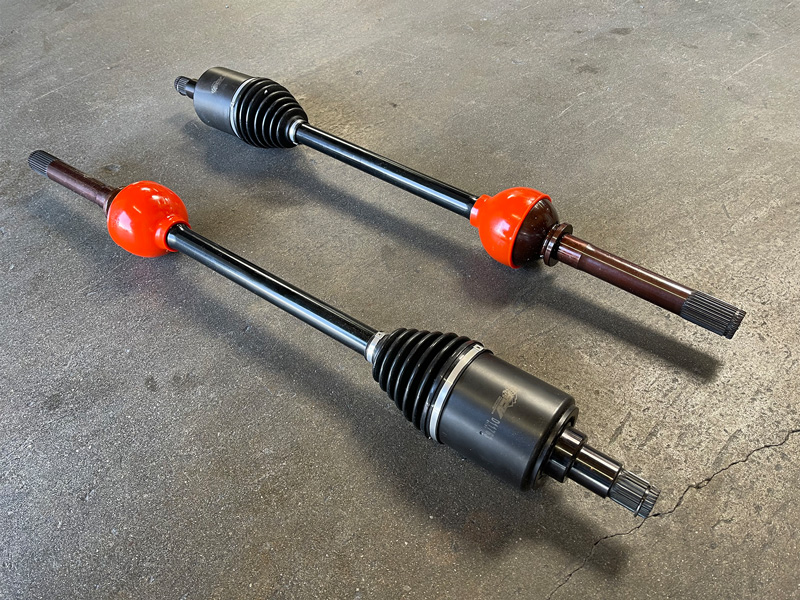
The 4WD fabricated spindles require the Solo Motorsports RCV Hybrid Axle Package, sold separately.
The axle package is necessary to connect the Toyota 4WD drivetrain to the Dana 44 hub configuration used by the fabricated spindle.
Limited Lifetime warranty through RCV (some restrictions apply)**
Important Notes
All applications require aftermarket upper control arms equipped with a 1″ uniball 5/8″ Bolts (We sell conversion kits if your UCAs have 3/4″ bolts.)
The 4WD spindle provides no spindle lift. This is intentional because the front axle must pass through the spindle and connect to the hub.
Tundra and Sequoia lower ball joint size changed during the 2003 production year. Early vehicles typically use the smaller V/square-pattern lower ball joint, while later vehicles typically use the larger rectangular-pattern lower ball joint. Because some vehicles may have either configuration or previously replaced components, verify the lower ball joint before ordering.
Extended stainless steel brake lines are available separately.